Skip to content
🍪

Cookie information

This site uses cookies to provide you with an optimal experience. Legal notices and GDPR

🍪 Cookie preferences

Choose to accept or decline certain cookies. Our cookie policy can help you make this choice.

Cookie information

Essential cookies are necessary for the proper functioning of this website.

Statistics

We use Google Analytics to anonymously collect statistics on site visits and interactions.

Embedded content

We use external services (YouTube, OpenStreetMap, etc.) to display videos, maps, or other useful content. These services use their own cookies. Declining these will automatically block the display of this content on the site.

L'ancienne carrière de marbre dite 'Saint-Martin'

Discovery and recreation

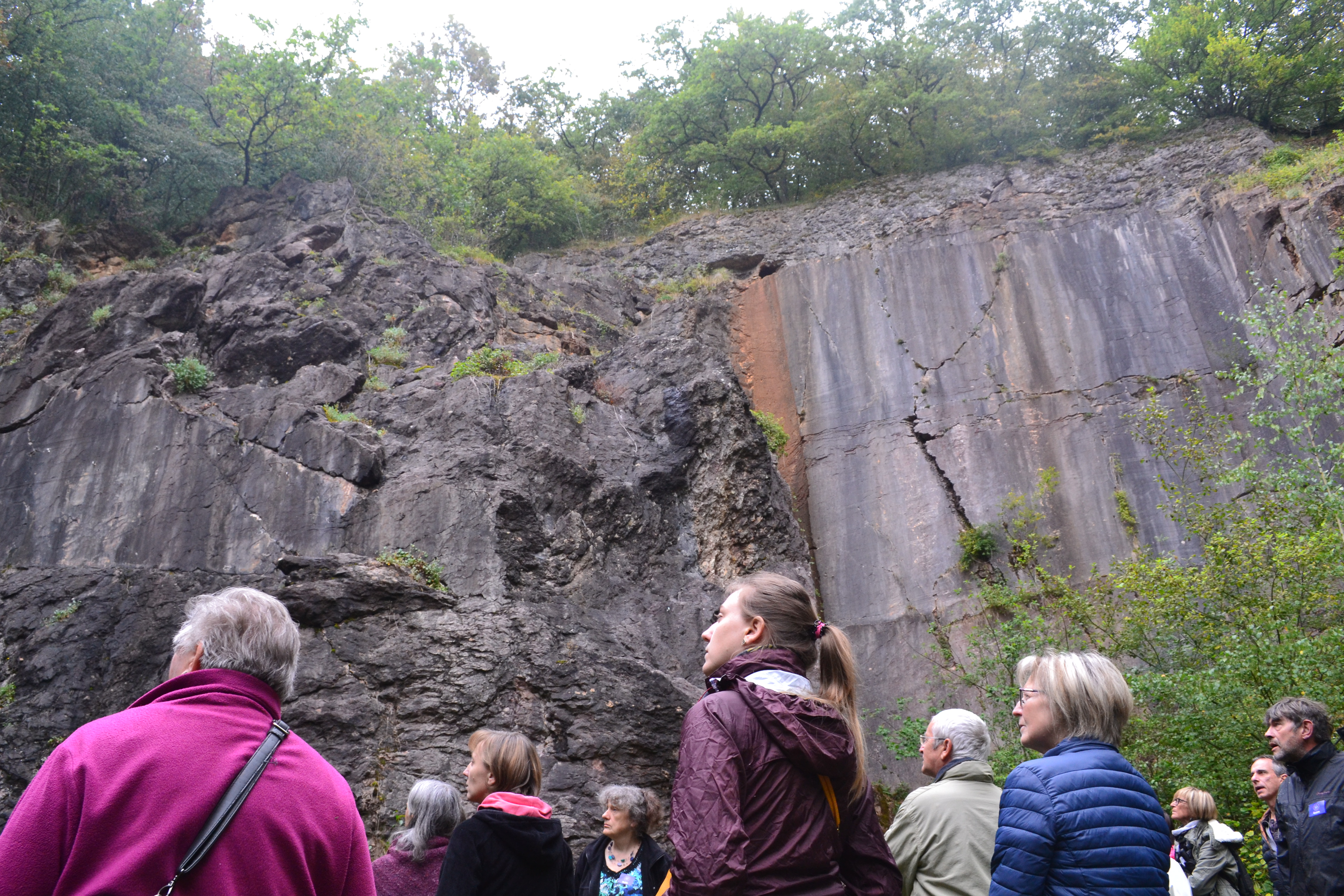
On the roadside, between Humain and Aye, lies the Saint-Martin quarry, an old gray and red marble quarry exploited during the 18th century. The site is filled with mysteries and bears tangible witness to the human activities that took place there (private property). The parish was incorporated into the Abbey of Saint-Remy since 1542 and remained so until 1717. Between 1660 and 1664, the small church dedicated to Saint-Martin in the village of Vieil-Humain, now vanished, was devastated and destroyed. It was located on a rocky promontory, above the future quarry, to the northeast of Humain. A new church was built in the current village of Humain. Quarrying began between 1732 and 1735, at the site of the destroyed church. François Debouge, a prominent Namur marble worker, took an interest in it for a time in the 18th century but did not realize any project. Indeed, this marble could not compete with that of Saint-Remy, and the quarry was abandoned. In 1838, it was purchased by a man named Dupont from Dinant. After World War II, the quarry experienced a brief period of prosperity, until 1980. Saint-Martin marble is light (gray in color) and dry, paler than Saint-Remy, sometimes with small amounts of Byzantine marble featuring dark spots and patterns of small corals. The presence of marble in this location must have been known for a long time, as the foundations of the old church were dug into a reddish stone.
Address rue de Humain 65 6900 Humain

Share the article

Currently on Marche